Guided by the philosophy of Bringing In, Integrating, and Going Global, the College deeply integrates high-quality international educational resources to forge a new model of mutual learning between Chinese and international education systems. Currently, it operates three core international education divisions: inbound international student education, China-UK undergraduate international education, and Sino-foreign cooperative degree programs. By strategically coordinating seven distinctive undergraduate programs within an international education framework, the College has established a multi-tiered talent development system that bridges China and the world. This system fosters collaborative growth and cultivates globally competent professionals through cross-cultural synergy
China-UK Undergraduate International Education Program
As one of only five undergraduate-level programs among 34 national project institutions, and the sole approved provider in Xinjiang, the China-UK Program has been a pioneer since its first approval in 2004. Authorized and certified by the Chinese Service Center for Scholarly Exchange (CSCSE) under the Ministry of Education, the program integrates cutting-edge international educational concepts with localized teaching practices. It offers five majors: international economics and trade, human resource management, accounting, marketing, and information management and information systems. In 2017, the program was highlighted in the Joint Statement of the Fifth Meeting of the China-UK High-Level People-to-People Exchange Mechanism, a testament to its contributions to China-UK educational collaboration. Over two decades of development, the program has become a model of China-UK educational cooperation, providing students with a premium international platform and cultivating a large number of high-level applied talents with global perspectives.
China-Foreign Cooperative Education Programs
As the only university in Xinjiang approved for China-Foreign Cooperative Education Programs, the College leverages the strategic advantages of the Belt and Road Initiative to focus on cultivating interdisciplinary talents in international logistics and construction. The transportation and civil engineering programs are among the few of their kind in China tailored for collaboration with Russian-speaking countries. The two programs have in-depth cooperation with two leading Russian universities, namely Pacific National University and Tomsk State University of Architecture and Construction. Pacific National University is a key comprehensive university in the Russian Far East and a member of the China-Russia Comprehensive University Alliance, with strong expertise in logistics engineering. Tomsk State University of Architecture and Construction is one of Russia’s four prestigious architecture universities, ranking second in architecture and civil engineering nationwide, and its civil engineering discipline is renowned throughout Russia.Through an innovative dual training program + dual faculty allocation model, transnational teaching teams have been established to internationalize the curriculum. In 2021, the College was approved as a certified center for the Test of Russian as a Foreign Language. Graduates have demonstrated exceptional competitiveness in the Silk Road Economic Belt development, positioning the programs as benchmarks for regional international talent cultivation.
Education for International Students in China
Since enrolling its first international students in 1986, the College has built a comprehensive, multi-tiered education system that bridges global and local perspectives. Over 3,500 international students from 40 countries across five continents have graduated from the College. In 2014, the College was honored with the title of Outstanding Institution for International Student Education by the Foreign Student Education Management Branch of the China Higher Education Association. International students have consistently excelled in regional competitions, reflecting the program’s educational excellence. Since 2016, the College has successfully hostedelevenconsecutive Shanghai Cooperation Organization (SCO) Cross-Cultural Exchange Events, enhancing the university’s global reputation and fostering people-to-people bonds. By optimizing student recruitment, strengthening quality oversight, and deepening cultural immersion, the College has nurtured a large cohort of high-caliber international talents who understand and appreciate China.
Future Vision
Moving forward, the College will deepen educational openness, capitalize on Xinjiang’s geographical strengths, absorb advanced international educational concepts, and accelerate the introduction of global high-quality resources. The College aims to build a regional model for international education and establish a talent incubation hub radiating across Belt and Road countries, contributing to the cultivation of globally competent professionals.

Xinjiang Agricultural University
College of International Education
No. 311, Nongda East Road
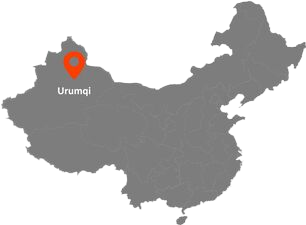
Urumqi, Xinjiang
830052
China